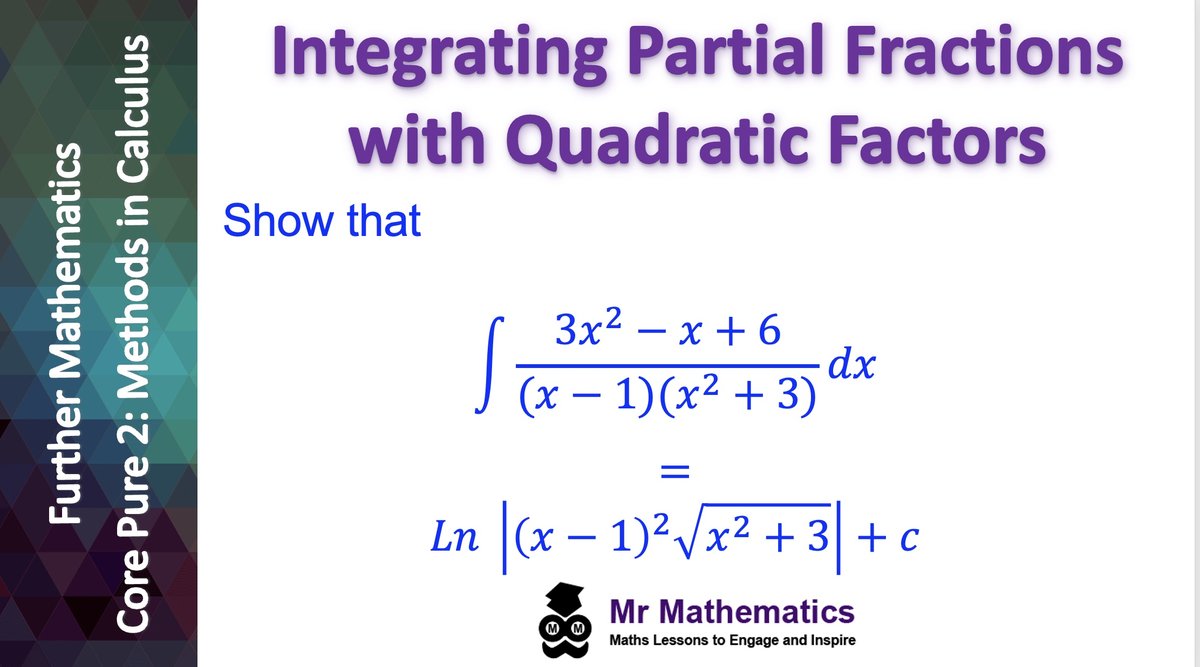
Partial fractions might sound like a niche topic from a calculus textbook, but dig a little deeper, and you'll uncover the Key Applications of Partial Fractions in Calculus & Engineering that drive innovation across countless fields. This mathematical technique is far more than just an academic exercise; it's a crucial tool for simplifying complex problems, making the seemingly impossible solvable, and ultimately, building the world around us. From designing robust bridges to optimizing drug delivery systems, partial fractions are the unsung heroes behind many critical advancements.
At a Glance: Why Partial Fractions Matter
- Simplifies Complex Functions: Decomposes complicated rational functions into easier-to-manage parts.
- Powers Integration: Essential for solving integrals that resist other methods, a cornerstone of calculus.
- Solves Differential Equations: Key to finding solutions for many types of ordinary differential equations (ODEs) crucial in modeling dynamic systems.
- Engineers' Go-To Tool: Indispensable for analyzing circuits, predicting structural behavior, processing signals, and more.
- Cross-Disciplinary Impact: Applied in physics, chemistry, economics, computer science, and beyond to model and understand complex phenomena.
The Core Idea: Breaking Down Complexity
Imagine trying to understand a super complex machine by looking at all its tangled wires and gears at once. It's overwhelming. Now, imagine if you could break that machine down into several smaller, simpler components, each performing a clear, understandable function. That's essentially what partial fractions do for rational functions in mathematics.
A rational function is just a fraction where both the numerator and denominator are polynomials. Sometimes, these fractions are too complicated to work with directly, especially when you need to integrate them. Partial fractions provide a systematic way to decompose such a function into a sum of simpler rational functions. Each of these simpler fractions is much easier to integrate, differentiate, or manipulate.
The magic happens when you factor the denominator of the original, complex function. Once factored, you can express the original function as a sum of new fractions, each with a simpler denominator (corresponding to one of the factors). This clever decomposition unlocks the door to a host of standard integration techniques, including inverse trigonometric functions and even integration by parts, which would be impossible or incredibly difficult otherwise. For instance, our partial fraction generator can quickly demonstrate how this decomposition works, showing you the simpler components.
This isn't just a theoretical exercise for mathematicians; it's a practical necessity for engineers who constantly encounter these complex functions when modeling real-world systems.
Mathematics' Secret Weapon: Integrating the Impossible
At its heart, the primary application of partial fractions in pure mathematics lies in integration. Many rational functions, particularly those with complex polynomial denominators, simply cannot be integrated using standard methods like substitution or direct recognition. Partial fractions transform these intractable integrals into a series of basic integrals that are straightforward to solve.
Beyond direct integration, partial fractions play a crucial role in solving linear ordinary differential equations (ODEs) with constant coefficients. When you're trying to find particular solutions or work with initial and boundary conditions, especially when using techniques like the Laplace transform, you often end up with rational functions that need to be inverted back into the time domain. Partial fractions are the key to this inversion, allowing mathematicians to determine how systems evolve over time.
Furthermore, in complex analysis, partial fractions are instrumental in applying the residue theorem. This powerful theorem allows mathematicians to efficiently compute complex integrals by simplifying the determination of residues at singularities. By decomposing a complex rational function into its partial fractions, you can easily identify the poles and calculate their residues, transforming a daunting integral into a manageable sum.
Engineering's Backbone: From Circuits to Structures
For engineers, mathematics isn't just abstract theory; it's the language of design, analysis, and problem-solving. Partial fractions provide a fundamental analytical framework that permeates various engineering disciplines, enabling professionals to model, predict, and optimize complex systems. Without this technique, many of the calculations essential for modern engineering would be significantly more challenging or even impossible.
Unlocking Electrical Engineering Puzzles
In electrical engineering, partial fractions are indispensable for analyzing the behavior of dynamic circuits. Components like capacitors and inductors store and release electrical energy, creating systems whose responses are often described by rational functions in the frequency domain (using Laplace transforms).
Engineers use partial fractions to:
- Analyze current and voltage flow: By decomposing the system's transfer function, engineers can determine how current and voltage change over time when a circuit is powered on or subjected to different input signals.
- Design optimal circuit performance: Understanding these responses allows for the design of filters, amplifiers, and control systems that perform reliably and efficiently. For example, if you're designing an audio equalizer, partial fractions help you determine how different frequencies will be amplified or attenuated.
Predicting Motion and Stability in Mechanical Systems
Mechanical engineering relies heavily on understanding how physical systems respond to forces. One critical area is the simulation of vibrations in structures. Whether it's a bridge swaying in the wind, a building reacting to an earthquake, or an airplane wing experiencing turbulence, predicting these responses is vital for safety and stability.
Partial fractions assist mechanical engineers in:
- Modeling dynamic responses: When a structure is subjected to an external force, its motion can often be described by differential equations that, when solved, involve rational functions. Partial fractions help decompose these solutions to understand the individual modes of vibration.
- Ensuring structural integrity: By predicting how a system will oscillate or deflect under various loads, engineers can design structures and components that withstand anticipated stresses, preventing catastrophic failures.
Chemical Kinetics and Pharmaceutical Precision
In chemical engineering, understanding reaction rates is fundamental to designing efficient processes and developing new products. Many chemical reactions follow complex rate laws that, when expressed mathematically, can involve rational functions.
Partial fractions are vital for:
- Analyzing reaction mechanisms: They help decompose complex rate expressions, allowing engineers and chemists to better understand the individual steps and contributing factors in a multi-step reaction.
- Optimizing drug delivery: In pharmacokinetics, partial fractions are used to model how medicines break down and are absorbed by the body. This helps determine a drug's half-life, its optimal dosage, and improved delivery methods to ensure maximum therapeutic effect with minimal side effects.
Crystal Clear Signals: The Power of Processing
Signal processing is all about extracting meaningful information from raw data, often by manipulating complex signals. From your smartphone's ability to filter out background noise during a call to the sophisticated systems used in medical imaging, signal processing is everywhere.
Partial fractions play a crucial role in:
- Designing filters: Engineers use partial fractions to design digital and analog filters that can separate specific parts of complex signals. This is essential for tasks like removing unwanted noise from digital audio files, enhancing images, or isolating particular frequency bands.
- Analyzing system responses: When a signal passes through a system, its output is often described by a rational function. Partial fractions help analyze the system's poles and zeros, which dictate its stability and frequency response characteristics.
Economic Forecasts and Financial Modeling
Even in fields that seem far removed from engineering, like economics and finance, partial fractions find surprising applications. Mathematical models are used extensively to predict market movements, assess risk, and make informed investment decisions.
Partial fractions help economists and financial analysts by:
- Modeling market dynamics: By incorporating various factors that influence prices, demand, and supply, complex economic models often yield rational functions. Partial fractions simplify these models, making it easier to analyze the individual effects of different variables.
- Predicting future trends: This mathematical decomposition aids in understanding the underlying components of market behavior, helping in investment choices and future price predictions by breaking down complex macroeconomic interactions.
Quantum Leaps: Physics Through Partial Fractions
Physics, the foundational science, frequently encounters situations where partial fractions are essential for solving complex equations. From the subatomic realm of quantum mechanics to the vastness of electromagnetic fields, these mathematical tools provide clarity.
In physics, partial fractions are used to:
- Solve wave equations: Describing phenomena like wave functions in quantum mechanics often leads to differential equations that, when transformed (e.g., via Laplace or Fourier transforms), result in rational functions. Partial fractions help invert these back into the spatial or time domain.
- Analyze electric and magnetic fields: In electromagnetics, when dealing with circuits or systems with frequency-dependent responses, partial fractions help simplify the analysis of electric fields, magnetic fields, and wave propagation.
The Digital Architect: Computer Science Applications
Computer science, particularly in areas involving algorithms and data representation, also benefits from the power of partial fractions.
These applications include:
- Efficient algorithm design: In some areas of algorithm design, particularly those involving polynomial manipulation or generating functions, partial fractions can simplify expressions, leading to more efficient computations.
- Data compression and encryption: By expressing repeated information more concisely or by simplifying mathematical structures used in cryptographic algorithms, partial fractions can contribute to more effective data handling and security.
- Computer graphics: Algorithms used to create realistic 3D models and lighting effects often involve complex calculations of how light interacts with objects. Partial fractions can be integrated into these algorithms to simplify certain expressions, helping to calculate light paths and reflections more efficiently for improved visual quality and faster rendering.
Beyond the Textbook: Common Questions About Partial Fractions
Partial fractions might seem daunting at first glance, but understanding their practical utility can demystify them. Here are some common questions people have:
What's the biggest misconception about partial fractions?
The biggest misconception is often that partial fractions are only for integration. While integration is their primary role, they're fundamentally a decomposition technique. They simplify rational functions for any manipulation, be it differentiation, solving differential equations, or analyzing system responses in engineering, not just finding antiderivatives.
When do I not need partial fractions for rational function integration?
You don't always need them! If the rational function can be solved by simple u-substitution (e.g., if the numerator is the derivative of the denominator), or if it can be directly related to an arctangent form (like $\frac{1}{x^2+a^2}$), partial fractions are overkill. They're typically reserved for cases where the denominator factors into distinct linear or irreducible quadratic terms and a simpler substitution isn't immediately obvious.
Is it always about integration?
No, as highlighted throughout this article, while integration is a major player, partial fractions' utility extends far beyond. Their core strength is in decomposing complex rational expressions. This decomposition is incredibly powerful when dealing with Laplace transforms, analyzing system transfer functions in engineering, or even in certain areas of pure mathematics like the residue theorem, where direct integration isn't the immediate goal but simplification is.
Mastering Complexity: Your Next Steps with Partial Fractions
Partial fractions are a powerful testament to how abstract mathematical concepts become indispensable tools in the real world. They provide the analytical backbone for countless engineering innovations and scientific discoveries, allowing us to build, predict, and understand with greater precision.
If you're delving into calculus, engineering, or any field that demands a deep understanding of dynamic systems, mastering partial fractions isn't just about passing an exam—it's about gaining a fundamental superpower. By breaking down complex rational functions into simpler, more manageable parts, you unlock the ability to solve problems that would otherwise remain intractable. Embrace this technique, and you'll find yourself equipped to tackle some of the most fascinating challenges in mathematics and beyond.